Mini-Musicals: A Perfect Fit for Grades K-2
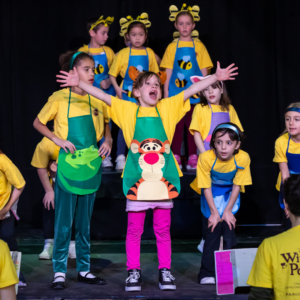
PAA sets the stage for all ages, creating an environment where stars as young as kindergarten can step into the spotlight and experience the magic of musical theatre.
Grades K-2nd can experience musical theatre productions through PAA’s “mini-musicals”.
These young performers not only thrive on stage but also enjoy the process along the way.
Mini-musicals incorporate all the elements of musical theatre (singing, acting, and dancing) while fostering a love for the performing arts.
PAA mini-musical directors engage the creative spirit of this age group by creating a supportive environment that boosts their confidence, creates community, and inspires excellence.
Below, we answer FAQs about PAA’s mini-musicals. Learn about these magical productions and enroll your budding star today!
Mini-Musical Audition Format:
PAA teaching artists introduce elements of the audition process without overwhelming mini-musical students. The best part is that no prior preparation is required.
Mini-musical directors teach a small portion of a song and a short dance combination from the show and ask students to perform in small groups.
For the acting portion, students repeat lines back to the directors. If necessary, directors conduct a “callback,” which includes a child repeating a longer line or singing by themselves if they choose.
“It’s low pressure and primarily used to get to know the kids a bit better before making casting decisions,” shares PAA Mini-Musical Director, Kat Gabriel.
Mini-Musical Casting Process:
Directors look for loud voices and big energy within each movement. The student’s ability to focus and follow directions helps determine which role best suits each student. Directors also take the kids’ wants into consideration.
For example, if they don’t want a big role with many lines, directors honor that request. Other factors directors consider include pitch accuracy, choreography retention, and acting choices.
What if my child is shy?
Shyness and audition nerves are absolutely normal and nothing to worry about! PAA mini-musicals auditions kick off with a game to shake off the nerves.
Students learn both the song and dance as a group – at no point in the initial audition are students required to sing or dance alone. If directors want to hear/see more from an individual, they do that in a callback with other individuals or on the side during a break, so it’s less nerve-racking.
Gabriel adds, “The musicals for this age group are often silly, so it doesn’t take long for even the shyest kid to start warming up and having fun!”
How do you encourage memorization?
Repetition, repetition, repetition! For memorizing lines, dances, and songs, the key is to break it down into manageable chunks and slowly put it together, repeating each section many times until they can start running the whole song, dance, etc.
Because these musicals are put together in a short amount of time, we take our time with the initial teaching, knowing we may not get back to it for a while.
Mini-musical lines, songs, and dances are relatively simple and easy for this age group to learn, setting them up for success from the beginning.
What teaching methods do you use?
We use a variety of methods throughout the process, but the majority of learning happens while on our feet and moving around. When learning music, we may sit around the piano to learn the notes, but this age group learns best by adding movement along with the songs. It’s a lot of demonstration and asking students to copy the lines, songs, and dances.
Is my 5-year-old ready to perform in a show?
The biggest factor to consider is whether your child can follow directions.
Musical theatre is a group activity. Following directions and working together help make musicals successful.
“Kindergarten is a great time to learn these skills. While these students don’t need to have mastered them before being in a show, they must have an understanding that it’s not like playing pretend at home in the sense that they can’t just do their own thing. As long as they have basic direction following and cooperation skills, they’re ready to be in a show!”, Gabriel adds.
How can parents help kids succeed?
While everything will be taught and practiced repeatedly in rehearsals, it’s very helpful if adults run lines with their students at home. This allows directors to spend more time on the fun acting and dancing, rather than just learning the lines.
A word from a PAA Mini-Musical Director:
“My favorite part about these shows is the energy and fearlessness this group brings to the stage. The room is always filled with positivity, and fun is absolutely the central focus. The kids are always up for anything, and the “I can do that!” attitude, even when things are new and unfamiliar, is delightful!” – Kat Gabriel
A word from Mini-Musical students:
“That was so much fun!”
“When is the next one?”
“I can picture myself driving to PAA as a teenager and doing shows forever!”
Gabriel adds, “Watching the kids absolutely glow with confidence after a successful show is so special. I’m always incredibly proud of the work the kids do, but seeing how much pride they have in themselves is what makes it truly worth it!”
Check out PAA’s year-round mini-musical options and enroll your student grades K-2 today!